Open any current top-ten foundation list and you’ll find the same word in nearly every product description: blur. The expectation that a primer or foundation should optically smooth the appearance of pores, fine lines, and surface texture has gone from differentiator to baseline in less than a decade. The mechanism that makes it possible — and the one that most formulators still under-use — is the silicone elastomer gel.
What an elastomer gel actually is
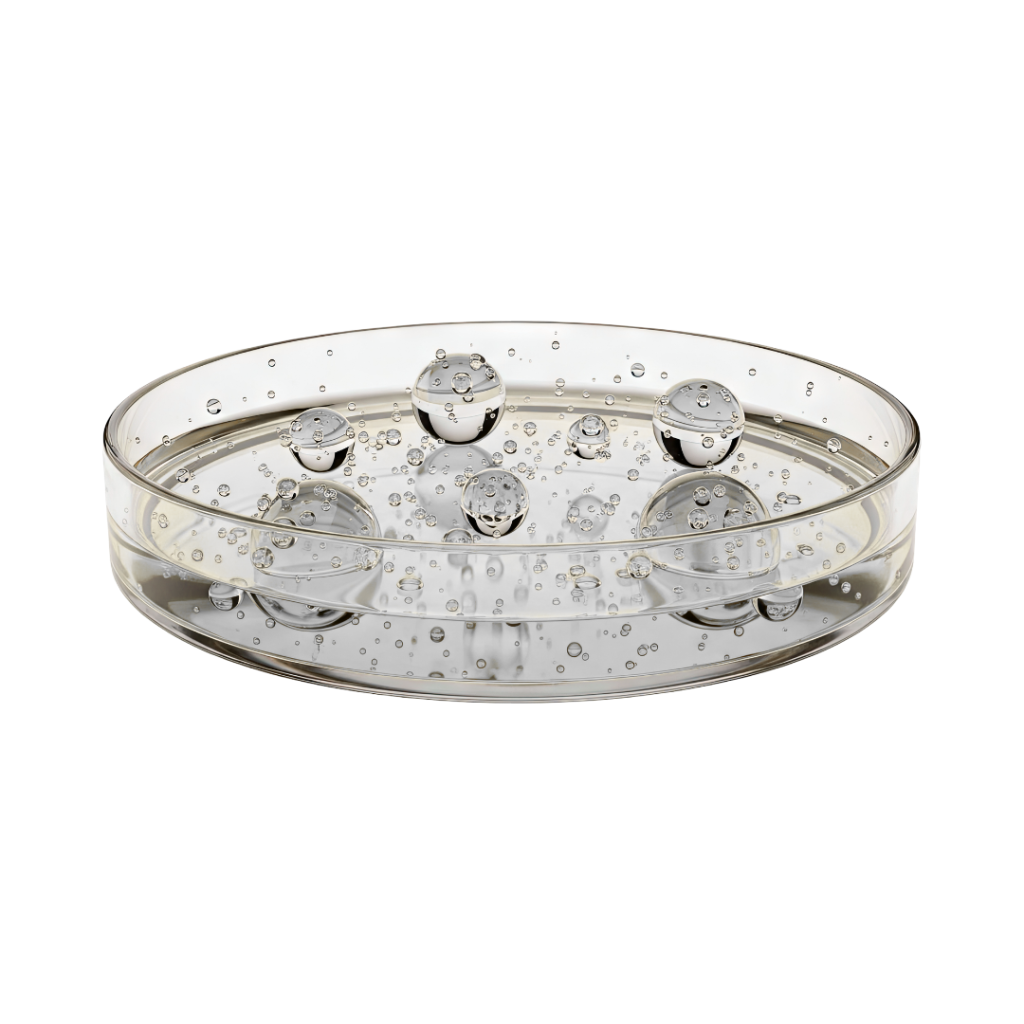
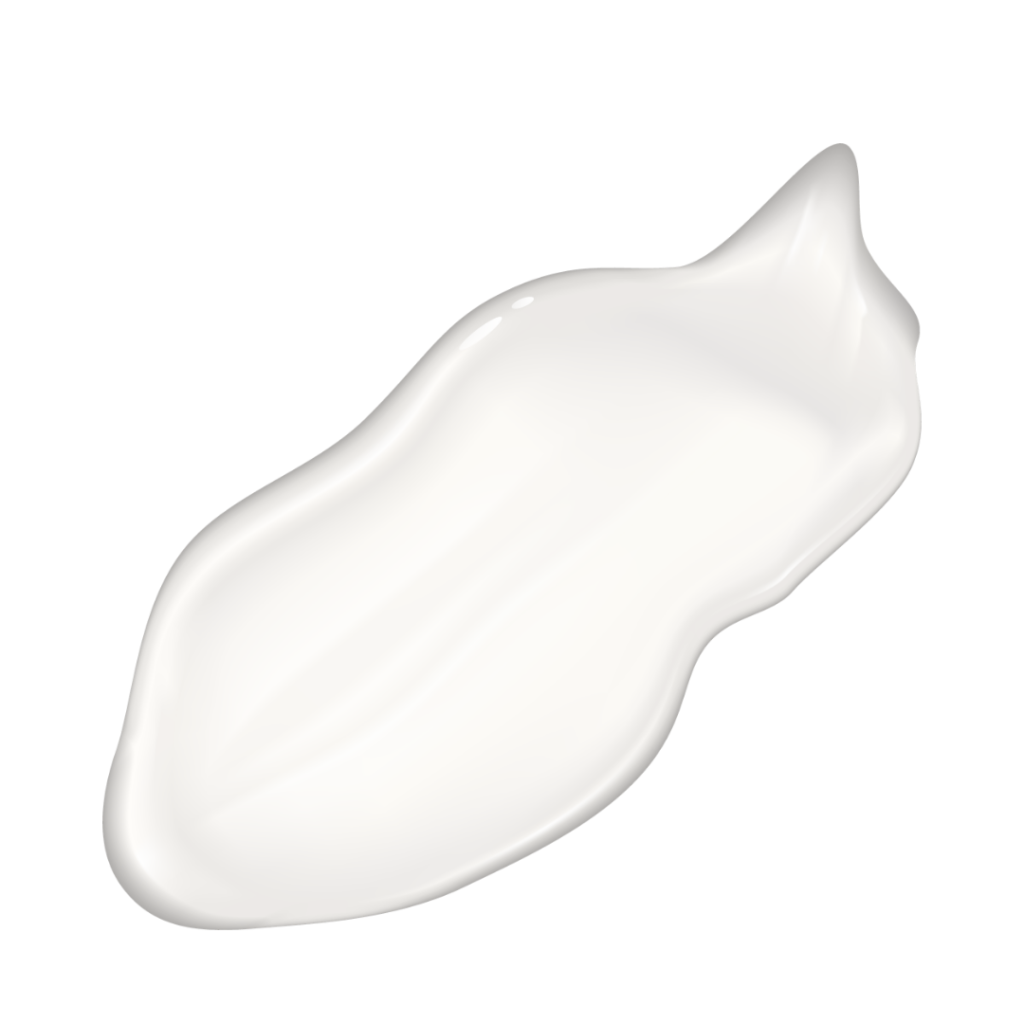
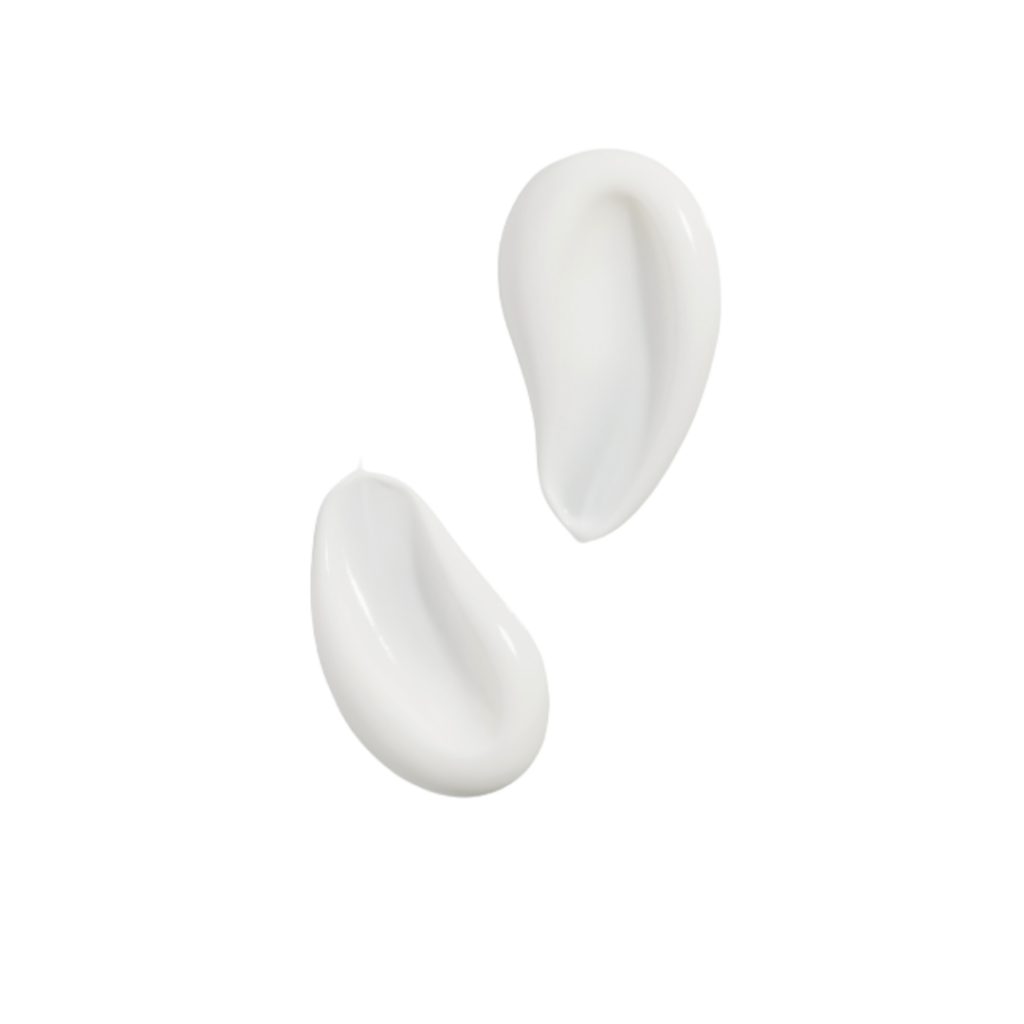
A silicone elastomer is a three-dimensional crosslinked network of polydimethylsiloxane chains, with the crosslinks formed via Si-H + vinyl hydrosilylation. On its own, this network is a hard, rubbery solid — useful in implants, useless in cosmetics. The trick is to swell it with a compatible silicone fluid (typically D5 or, increasingly, isododecane), at which point it transforms into a soft, white, paste-like gel that incorporates 70–90% liquid by weight while maintaining structure.
The result is a material that:
- Spreads as effortlessly as a fluid silicone (the liquid phase carries it)
- Collapses into a thin film on shear (the network deforms reversibly)
- Releases its swelling fluid into surrounding skin pockets and wrinkles, then settles into a uniform refractive layer
That third property — the partial release of swelling fluid as the gel deforms — is the actual mechanism behind ‘blur’. The gel preferentially fills concavities (pores, fine lines) and presents a smoother, lower-frequency optical surface. It’s not pigment-based smoothing; it’s topographic smoothing.
A powder gives you optical scattering. A film former gives you a flat surface. An elastomer gel gives you both, plus topographic correction. That’s why it’s so hard to replace.
The two metrics that matter
When you’re choosing an elastomer gel for a new formulation, two specifications matter more than any other:
1. Active concentration
How much crosslinked network the gel contains, by weight. Most commercial elastomer gels — including our GK-6034 (Crosspolymer Gel) — are sold at 25%, 30%, or 35% active. Higher active means more network, more pronounced blur, and faster onset of velvet feel — but also a higher risk of ‘rolling’ (the polymer balling up under shear) if you push the use level too high.
2. Crosslink density and swelling solvent
Crosslink density determines the ‘snap’ of the gel: high density gives a more solid, structured feel; low density gives a more cushioned, melting feel. The swelling solvent determines compatibility — D5-swollen gels are dropping out of European formulations as cyclic silicones face restrictions; isododecane-swollen gels are rising. (We’re launching an isododecane-swollen variant of GK-6034 in Q2 2026.)
Building it into a primer base
Here’s a starter formulation for a soft-focus primer using GK-6034 at 18% active. We typically share this with customers who are evaluating elastomer gels for the first time:
18% GK-6034 Crosspolymer Gel 30 · 12% Isododecane · 10% Cyclopentasiloxane (or 10% C13–15 Alkane for D5-free) · 5% Caprylyl Methicone (GK PS-1713C) · 4% GK‑7P Vinyl Dimethicone Powder · 2% PEG-12 Dimethicone · 1% Tocopheryl Acetate · qs Phenoxyethanol blend.
Two production notes that catch first-time users:
- Don’t high-shear an elastomer gel. They are shear-sensitive and will lose viscosity if subjected to homogenisation above ~3000 rpm. Use a gentle paddle mixer, fold the gel in last, and never run more than 5 minutes after the final addition.
- Watch your hold temperature. Above 50°C the swelling solvent will begin to evaporate from the gel, irreversibly changing its rheology. Keep your batch under 35°C throughout.
What blur actually looks like — measured
You can quantify the ‘blur effect’ using a glossmeter and a wrinkle-replica substrate (we use the Beaulax silicone wrinkle plate, R-100). Apply a fixed mass of formulation at 2 mg/cm², equilibrate for 5 minutes, and measure 60° gloss across the wrinkle line. Lower delta-gloss between in-wrinkle and on-flat measurements means more topographic smoothing.
| Formulation | Δ Gloss (in-wrinkle vs. flat) | Subjective ‘velvet’ rating |
|---|---|---|
| Plain D5 + powder (control) | 4.2 GU | 5.5 / 10 |
| + 8% Elastomer Gel | 2.8 GU | 7.2 / 10 |
| + 18% Elastomer Gel | 1.4 GU | 9.1 / 10 |
| + 18% Gel & 4% Powder | 1.1 GU | 9.4 / 10 |
Beaulax R-100 substrate. n=6 panels per row. Lower Δ Gloss = better topographic smoothing.
Two things to read here. First, the elastomer gel does the heavy lifting: doubling the use level from 8% to 18% nearly halves the gloss differential. Second, the silicone powder adds a marginal but measurable gain on top — but only after the gel has done its work. The reverse (powder-only, no gel) is meaningfully worse.
Common mistakes to avoid
Treating the gel as a thickener. Elastomer gels do build viscosity, but using them only for that effect is a waste. If you don’t need the optical and tactile properties, a polyamide or wax thickener is far more cost-effective.
Co-formulating with water. Pure dimethicone elastomer gels are hydrophobic and incompatible with water phases. Don’t try to incorporate them into the aqueous side of an emulsion; build your gel into the oil phase, then emulsify normally. Use a W/Si emulsifier (GK PES-7210A) for a stable system.
Starting too low. The blur effect is non-linear with concentration. Below about 8% active gel, you get most of the cushion but very little optical correction. We’d rather see customers start at 12–15% than waste a development cycle at 5%.
Where the technology is heading
Two developments are worth watching for 2026/27. First, hybrid gels that pre-swell the network with botanical esters rather than silicone fluids — these promise ‘clean beauty’-compatible blur, though our internal benchmarks suggest the optical performance is still about 20% behind silicone-swollen gels. Second, lower-active gels (10–15%) optimised for shower-grade products — bath and body brands are starting to ask for elastomer-gel slip in shave creams and post-shower balms.
If you’d like to discuss either direction, our application desk has bench data on both. Reach us at the contact form.
The reference primer formula above can be shipped as a 50 g finished prototype, plus a 100 g sample of GK-6034 to bench in your own lab. Free for qualifying brands. Request the kit.